
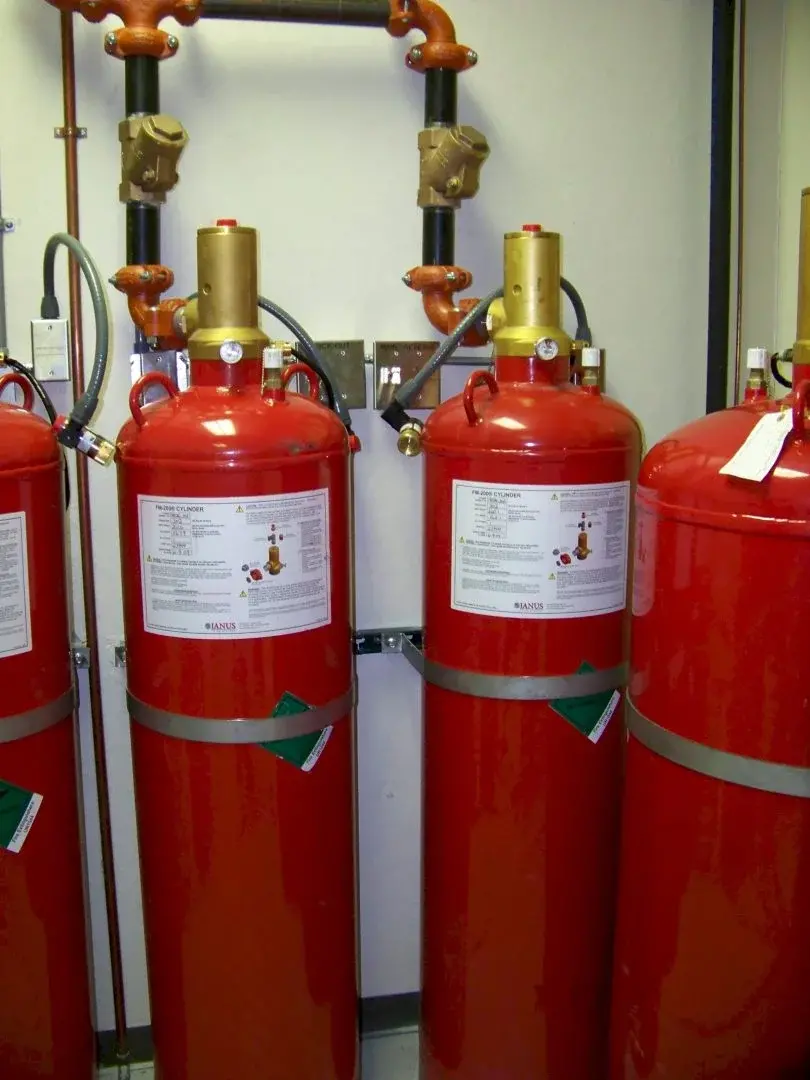
FM-200™ Fire Suppression Systems
Availability:In Stock!
FM-200™ Fire Suppression Systems
FM-200™, also commonly known as HFC-227ea, is a clean agent fire suppressant for Class A, B, and C fires and meets NFPA Standard 2001 Clean Agent Fire Extinguishing Systems. Clean agents are fast and effective in suppressing fires, are safe in occupied spaces, and do not leave a residue.
FM-200™ Fire Suppression Systems
Based on 0 reviews
Be the first to review “FM-200™ Fire Suppression Systems”
Related products
-
Fire Extinguishers, Fire Suppression System
2KG CO2 Fire Extinguisher
2KG CO2 Fire Extinguisher
It ceases fire by removing the oxygen of the fire triangle. They are usually used for Class B and electrical fires and are ineffective in the case of Class A fires. Are common firefighting tools, they are found almost everywhere. Unlike the foam type and powder type extinguishers, they do not leave any irritating foam or residue after extinguishing fire.
SKU: n/a -
Fire Extinguishers, Fire Suppression System
4kg CO2 Fire Extinguisher
4kg CO2 Fire Extinguisher
CO2 extinguishers are predominantly used for electrical fire risks and are usually the main fire extinguisher type provided in computer server rooms. They also put out Class B fires (flammable liquids, such as paint and petroleum).
CO2 extinguishers suffocate fires by displacing the oxygen the fire needs to burn.
SKU: n/a -
Fire Extinguishers, Fire Suppression System
9KG Dry Powder Fire Extinguisher
9 Kg Dry Powder Fire Extinguisher utilizes the siliconized sodium bicarbonate to put out the class B and C fires. It forms a cloud and cuts off the oxygen supply that suffocates and breaks the chain of reaction of class B fires and does not conduct electricity back to the user. Its lightweight and easy to use.
SKU: n/a -
Fire Extinguishers, Fire Suppression System
9Kg Foam Fire Extinguisher
9Kg Foam Fire Extinguisher
- Has a capacity of 9kg
- Has an extinguisher rating of 27A 183B
- Supplied with a wall bracket
- Di electrical mist spray nozzle
- Corrosion resistant finish
- Has a working pressure of 14 bar(203psl)
- Test pressure is 27bar(392psl)
- Its fire rating is 21A, 183B
- Has a temperature range of 5c to 60c
SKU: n/a -


There are no reviews yet.